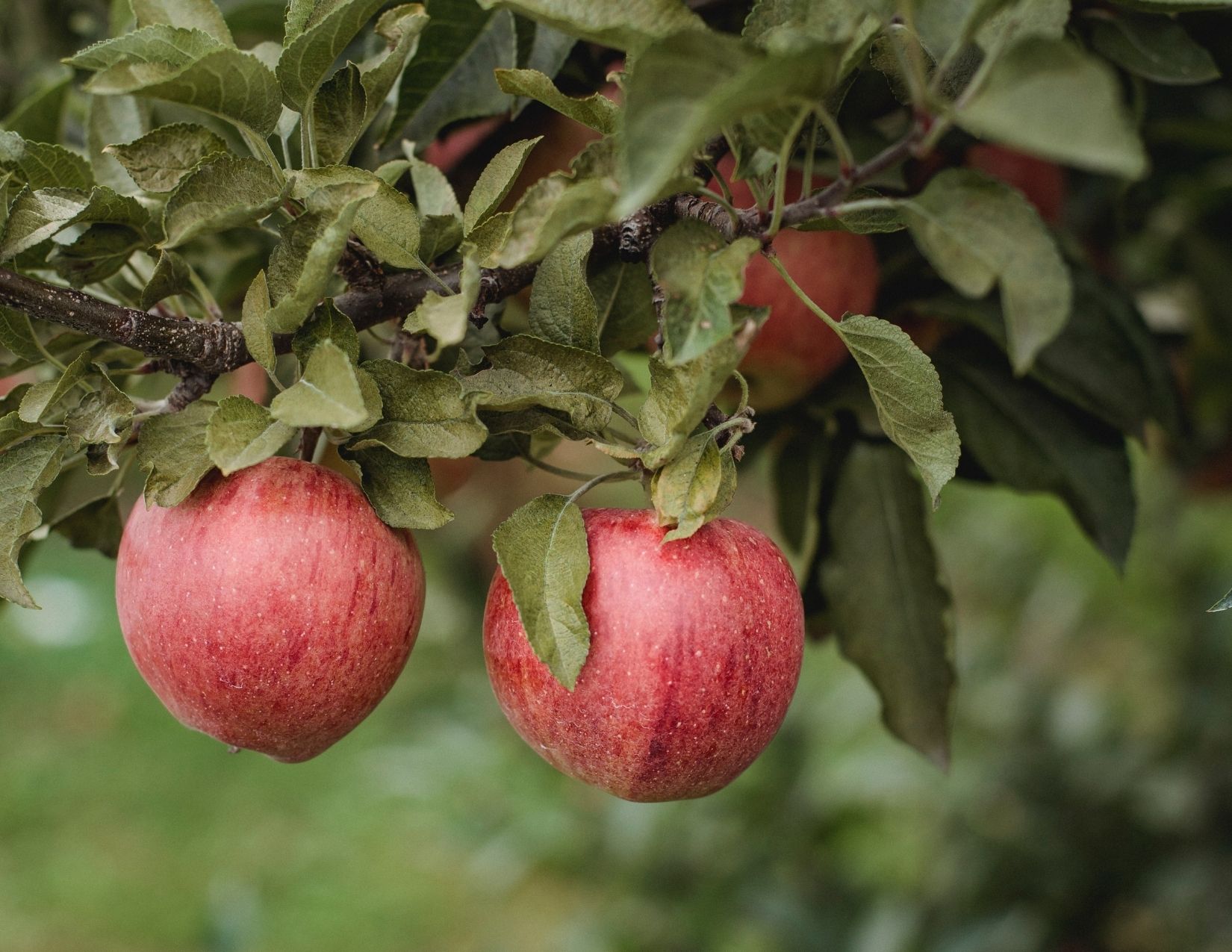
Imagine walking out your front door to pick a sweet, juicy peach off your own tree. A small acreage with a house and an orchard offers a way of life that is attractive to many. Orchards can be very attractive with the potential to generate extra income while reducing property taxes. For example, the Ontario government allows farmers to reduce their municipal property tax by 75% if they earn more than $7,000. In B.C., owners of small farms can enjoy a tax reduction with as little as $2,500 in farm sales (subject to change). These tax breaks encourage food security and support rural communities.
Selecting a property
In addition to the cost of the property, there are many factors to consider when selecting a hobby orchard:
Climatic Zone
Interactive Plant Hardiness Zone Maps are available on the Natural Resources Canada website. Currently Canada’s zones range from 0a in the far north to 9a in the warmest, southern reaches. Many tree and nut species will grow in zone 5 or warmer although buyers should research which plants will thrive in their specific area.
Elevation
Air temperature drops by approximately one degree Celsius for every 100-metre increase in elevation. Fruit will ripen more slowly in the cooler temperatures of an orchard located on a high plateau or hillside.
Soil pH
This refers to the alkalinity or acidity of the soil and is measured on a scale of 0 to 14, with 7 as the neutral mark. Anything below 7 is considered acidic soil and anything above 7 is considered alkaline. Apples, for example, prefer a slightly acidic soil of approximately pH 6 otherwise the apple tree cannot obtain necessary nutrients from the soil and its growth will be stunted.
Soil composition
Soil is composed of water, air, minerals such as silica, organic matter including decomposing plants, insects, etc., and varying amounts of nutrients (in particular, nitrogen, phosphorus, and potassium), metals, sulphides and even cyanide. A professional laboratory test is the best way to determine the health of the soil. These tests typically cost less than $150.
Slope
Cold air flows downhill, so trees planted immediately at the bottom of a hill may suffer from frost damage. Slope can also affect sun exposure.
Sun exposure
Unless a property is completely flat, slope will affect the amount of sunshine that falls on the plants. East and north-facing slopes receive the least amount of sun in Canada, while south and west-facing slopes receive the most.
Drainage
Clay tends to hold moisture and is heavy on the roots. With effort and investment in soil amendments (compost, wood chips, gravel bed, etc.), it is possible to improve drainage.
Health of the property
Over the years, the previous owner(s) may have applied large amounts of pesticides, herbicides and fertilizers, which can linger in the soil. Once applied, these chemicals quickly become invisible and odorless—and therefore easily disregarded. Provincial governments and Health Canada provide information sheets that list the risks and longevity of common orchard chemicals. With time, burdened properties can become safe and support a variety of life. For example, DDT continued to decimate bird populations long after this chemical was banned in 1972. Over time, some species rebounded, while others struggled. Twenty-six years after DDT was banned, a group of concerned citizens worked with the B.C. Ministry of Environment to reintroduce nine Peregrine falcons from an office rooftop in Kelowna, B.C. Matt Murray’s organic apple orchard in Kelowna is home to two peregrine falcons descended from the original nine. His feathered friends help to control rodents and starling birds (a highly destructive species introduced from Europe). Bats also flourish and help to control insect populations.
Modern orchardists have a wealth of scientifically-proven, eco-sensitive options to boost fruit production. Author Michael Phillips, recipient of the American Horticultural Society Book Award, suggests using neem oil as a fungicide/pesticide, non-pasteurized liquid fish fertilizer as a fungicide/fertilizer, applying compost and mulch, and growing comfrey plants near the tree trucks to draw up calcium from the soil and attract bees to pollinate fruit.
Local and provincial governments may have useful resources and incentive programs such as the codling moth pheromone project in Quebec in 2016. Another example is funding from the British Columbia government to help orchardists replant after a hazelnut blight that lasted for several years. Hobby orchard homesteads can offer a healthy lifestyle and potential tax benefits, not to mention bushels full of fruit and nuts!
The trademarks MLS®, Multiple Listing Service® and the associated logos identify
professional services rendered by REALTOR® members of CREA to affect the purchase,
sale and lease of real estate as part of a cooperative selling system. The trademarks
REALTOR®, REALTORS® and the REALTOR® logo are controlled by The Canadian
Real Estate Association (CREA) and identify real estate professionals who are
members of CREA.
Selecting a property
In addition to the cost of the property, there are many factors to consider when selecting a hobby orchard:
Climatic Zone
Interactive Plant Hardiness Zone Maps are available on the Natural Resources Canada website. Currently Canada’s zones range from 0a in the far north to 9a in the warmest, southern reaches. Many tree and nut species will grow in zone 5 or warmer although buyers should research which plants will thrive in their specific area.
Elevation
Air temperature drops by approximately one degree Celsius for every 100-metre increase in elevation. Fruit will ripen more slowly in the cooler temperatures of an orchard located on a high plateau or hillside.
Soil pH
This refers to the alkalinity or acidity of the soil and is measured on a scale of 0 to 14, with 7 as the neutral mark. Anything below 7 is considered acidic soil and anything above 7 is considered alkaline. Apples, for example, prefer a slightly acidic soil of approximately pH 6 otherwise the apple tree cannot obtain necessary nutrients from the soil and its growth will be stunted.
Soil composition
Soil is composed of water, air, minerals such as silica, organic matter including decomposing plants, insects, etc., and varying amounts of nutrients (in particular, nitrogen, phosphorus, and potassium), metals, sulphides and even cyanide. A professional laboratory test is the best way to determine the health of the soil. These tests typically cost less than $150.
Slope
Cold air flows downhill, so trees planted immediately at the bottom of a hill may suffer from frost damage. Slope can also affect sun exposure.
Sun exposure
Unless a property is completely flat, slope will affect the amount of sunshine that falls on the plants. East and north-facing slopes receive the least amount of sun in Canada, while south and west-facing slopes receive the most.
Drainage
Clay tends to hold moisture and is heavy on the roots. With effort and investment in soil amendments (compost, wood chips, gravel bed, etc.), it is possible to improve drainage.
Health of the property
Over the years, the previous owner(s) may have applied large amounts of pesticides, herbicides and fertilizers, which can linger in the soil. Once applied, these chemicals quickly become invisible and odorless—and therefore easily disregarded. Provincial governments and Health Canada provide information sheets that list the risks and longevity of common orchard chemicals. With time, burdened properties can become safe and support a variety of life. For example, DDT continued to decimate bird populations long after this chemical was banned in 1972. Over time, some species rebounded, while others struggled. Twenty-six years after DDT was banned, a group of concerned citizens worked with the B.C. Ministry of Environment to reintroduce nine Peregrine falcons from an office rooftop in Kelowna, B.C. Matt Murray’s organic apple orchard in Kelowna is home to two peregrine falcons descended from the original nine. His feathered friends help to control rodents and starling birds (a highly destructive species introduced from Europe). Bats also flourish and help to control insect populations.
Modern orchardists have a wealth of scientifically-proven, eco-sensitive options to boost fruit production. Author Michael Phillips, recipient of the American Horticultural Society Book Award, suggests using neem oil as a fungicide/pesticide, non-pasteurized liquid fish fertilizer as a fungicide/fertilizer, applying compost and mulch, and growing comfrey plants near the tree trucks to draw up calcium from the soil and attract bees to pollinate fruit.
Local and provincial governments may have useful resources and incentive programs such as the codling moth pheromone project in Quebec in 2016. Another example is funding from the British Columbia government to help orchardists replant after a hazelnut blight that lasted for several years. Hobby orchard homesteads can offer a healthy lifestyle and potential tax benefits, not to mention bushels full of fruit and nuts!
The trademarks MLS®, Multiple Listing Service® and the associated logos identify
professional services rendered by REALTOR® members of CREA to affect the purchase,
sale and lease of real estate as part of a cooperative selling system. The trademarks
REALTOR®, REALTORS® and the REALTOR® logo are controlled by The Canadian
Real Estate Association (CREA) and identify real estate professionals who are
members of CREA.
Sign up to receive our latest news
Our promise: We will never sell or share your information.