COVID-19 coronavirus is able to survive on cardboard for at least 24 hours and on hard surfaces such as doorknobs for three days and perhaps much longer; researchers found “viable” traces of the virus on a cruise ship 17 days after infected passengers had left (Chung, 2020). Most of us want to eliminate this tenacious and highly infectious virus from our homes, but how exactly do we ‘kill’ something that technically isn’t alive?
Viruses are genetic material (RNA) inside a thin, protein membrane with no other hallmarks of life such as motion, metabolism and reproduction. When the virus contacts a receptive host cell (like a moist mucus membrane in a person’s throat), it passes on its RNA, causing the host to produce countless copies. RNA viruses have been responsible for numerous destructive outbreaks including the flus of 1918, 1957, 1968; and SARS, MERS, Ebola and now COVID-19 (Kaplan, S, et al., 2020).
When cleaning your home, consider these important findings from CBC News:
- Viruses generally remain viable longer on smooth surfaces such as metal (except copper, which is a natural antimicrobial) and plastic and less time on porous surfaces like paper or clothing.
- Items that are touched frequently by multiple people (e.g., TV remote controls, doorknobs, computer mice/keyboards, taps, toilet lids, toys and phones) can spread germs and viruses.
- Indoor surfaces are riskier than outdoor, because the UV rays in sunlight can kill viruses (Chung, 2020).
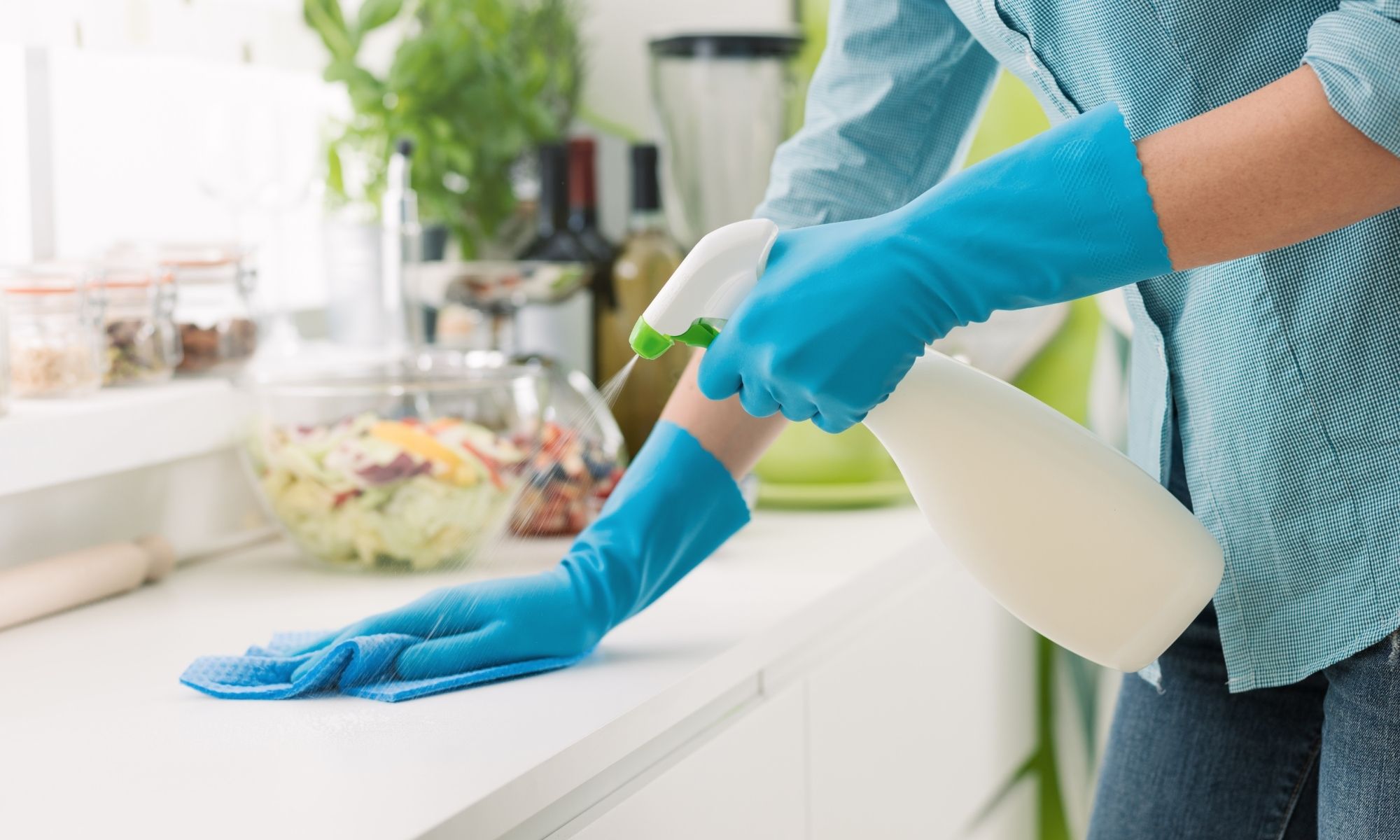
The Centre for Disease Control (CDC) in the U.S. recommends that people use a two-step cleaning process: first remove surface matter (e.g., germs, dirt, and impurities) then disinfect using EPA-registered products to tackle viruses including coronavirus. Always follow label instructions, wear gloves and ensure good ventilation.
A list of disinfectants considered effective against viruses is available on the Environmental Protection Agency’s website: https://www.epa.gov/pesticide-registration/list-n-disinfectants-use-against-sars-cov-2.
Some of the disinfectants on this list can be dangerous and are more often used by professional cleaning companies and veterinarians. The EPA is providing the list for public information and does not necessarily endorse the products. With names like “quaternary ammonium” and “hypochlorous acid” these are powerful cleaners. Many are not available to consumers and those that can be purchased without a license require caution; be sure to follow the manufacturer’s instructions.
The EPA list also includes more familiar items such as citric acid, which gives citrus fruit its sour taste, and hydrogen peroxide, which is sold in pharmacies to clean wounds and contact lenses. At higher concentrations, they can eliminate viruses like COVID-19.
Homeowners looking for effective products should review the list and will find a few recognizable brand names for disinfectant wipes, toilet cleaners etc.
For touch screens on electronics, the CDC recommends following the manufacturer’s guidelines. If those guidelines are unavailable, the CDC suggests using an alcohol-based wipes or spray containing at least 70% alcohol to disinfect touch screens. Dry the surfaces thoroughly to avoid pooling of liquids that could short circuit electronics.
Step one of the cleaning process is to remove surface impurities. Just as with hand washing, use warm, soapy water, rub and scrub for at least 20 seconds and repeat as often as needed. For extra cleaning power, consider adding these boosters to each litre of soapy water: a splash of white vinegar or lemon juice; and a few teaspoons of 3% hydrogen peroxide (available from pharmacies) or natural oxygen bleach, which is sodium carbonate and sodium carbonate peroxide.
Next, in order to disinfect, use one of the items listed by the EPA or diluted bleach. If you choose to use bleach, the CDC suggests diluting it to 5 tablespoons of bleach per gallon (3.79 litres) of water. Never mix household bleach with ammonia, soap or any other cleanser. Always open the windows for ventilation.
Around your home, prioritize the riskiest areas:
- door handles
- light switches
- countertops
- taps and sinks
- toilets
- computer keyboards and mice
- phones
- remote controls
- tabletops
The combination of elbow grease to remove surface impurities following by disinfecting can help to protect you and your family from a variety of germs and viruses.
References:
Centers for Disease Control (2019). Cleaning and Disinfection for Households; Interim Recommendations for U.S. Households with Suspected or Confirmed Coronavirus Disease 2019 (COVID-19). https://www.cdc.gov/coronavirus/2019-ncov/prevent-getting-sick/cleaning-disinfection.html
Chung, E. (2020). The riskiest surfaces for coronavirus and how to clean them; What materials are worst, how long the virus lasts, and how to protect yourself. CBC News (posted March 25, 2020). https://www.cbc.ca/news/health/covid-19-surfaces-1.5509619
Kaplan, S, Wan W., Achenbach J. (2020). The coronavirus isn’t alive. That’s why it’s so hard to kill: The science behind what makes this coronavirus so sneaky, deadly and difficult to defeat. The Washington Post (issue March 23, 2020). https://www.washingtonpost.com/health/2020/03/23/coronavirus-isnt-alive-thats-why-its-so-hard-kill/
Sign up to receive our latest news
Our promise: We will never sell or share your information.